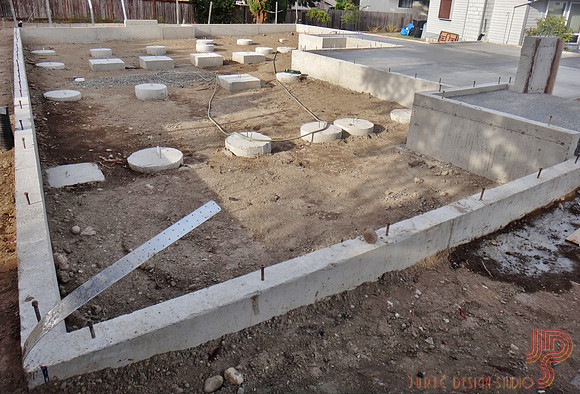
#231 Foundation
Often I tried to explain how houses are made up here in Pacific NorthWest but without much success. There are mini earthquakes daily, and the ground swells after the rain, so the foundation has to be flexible enough to compensate. This is why these concrete blocks are made as bases for studs that a whole house is going to be on. Two dozen studs are used as legs for the entire house and they are not really affixed to these concrete blocks. Those thin metal strips are used more like a duct tape but with a house built on these 'legs', ground can shake or change, and the house will still stay in one piece.
Fortunately, there are no tornados around here, or there would be too many Dorothys flying all the way to Oz. :)
~~~~~~~~~~~~~~~~~~~~~~
Ево овако изгледа основа класичне куће у овим крајевима. Нема подрума него само два туцета бетонских блокова који ће да послуже као подлога за носеће стубове. Само подлога, стубови неће бити забетонирани, него само слободно стојати на бетону. На такав начин може земља да се тресе од мањег земљотреса или да набрекне после кише, али кућа ће и даље да стоји без проблема.
Интересантно решење, зар не?